

Pharmaceutical Preparation Mixing Tank
Overview
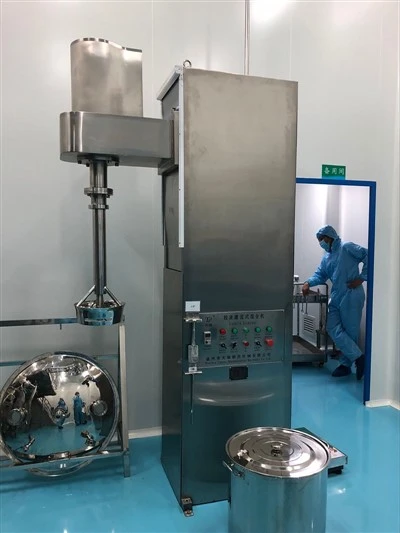
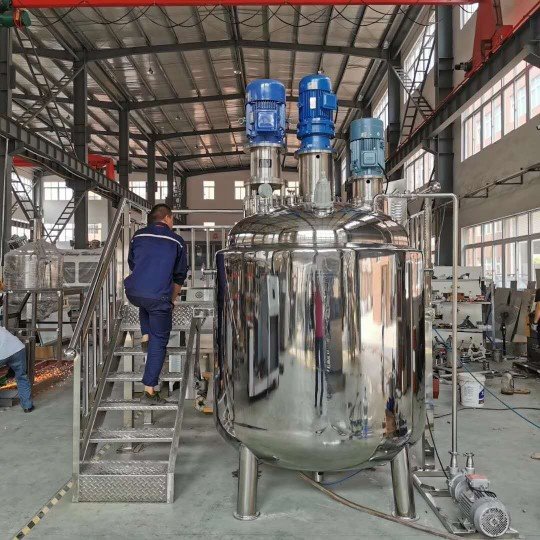
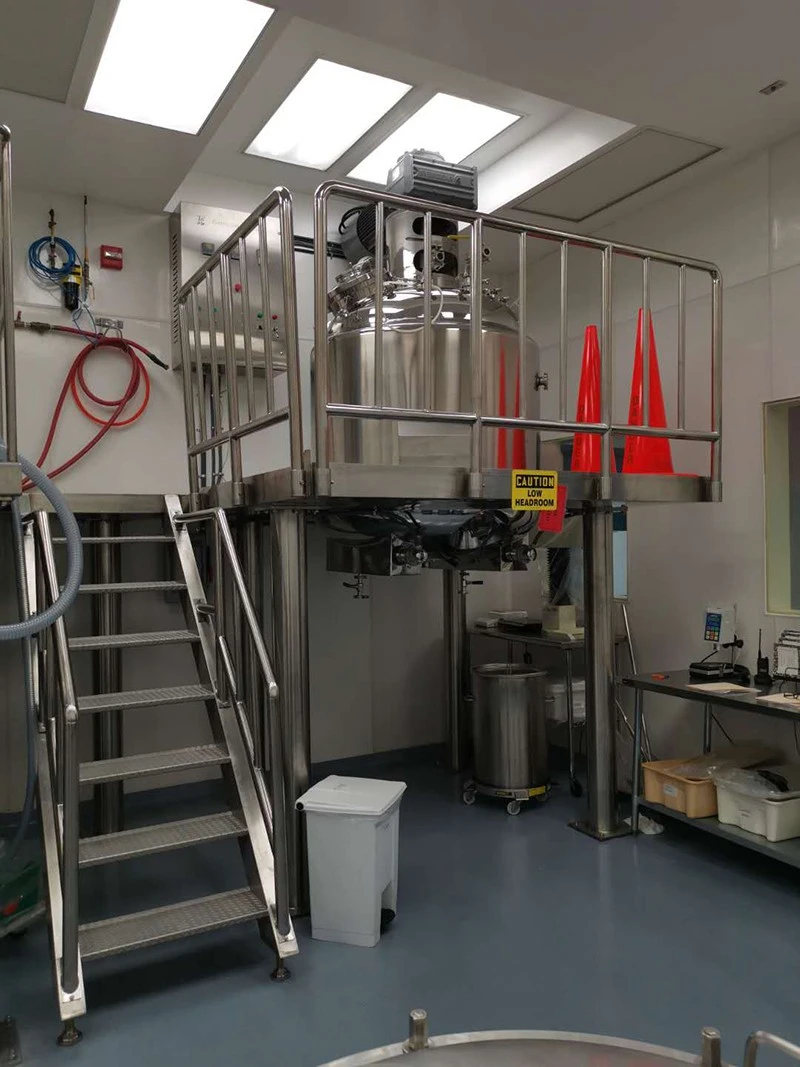
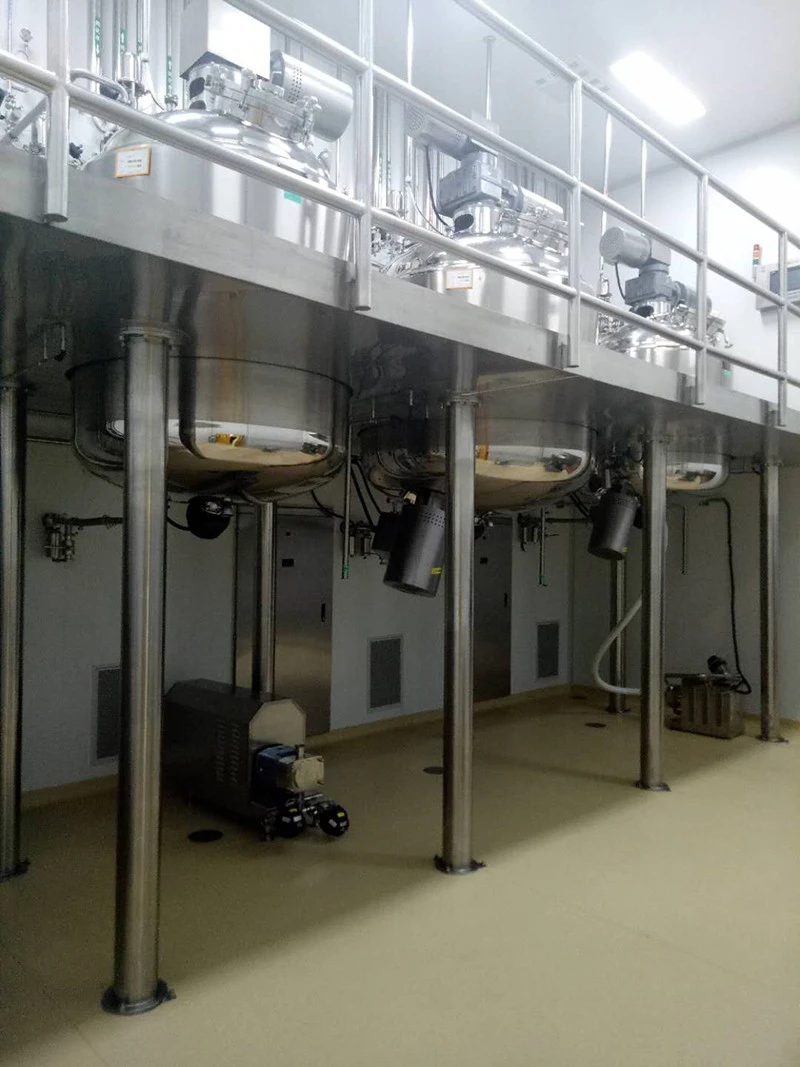
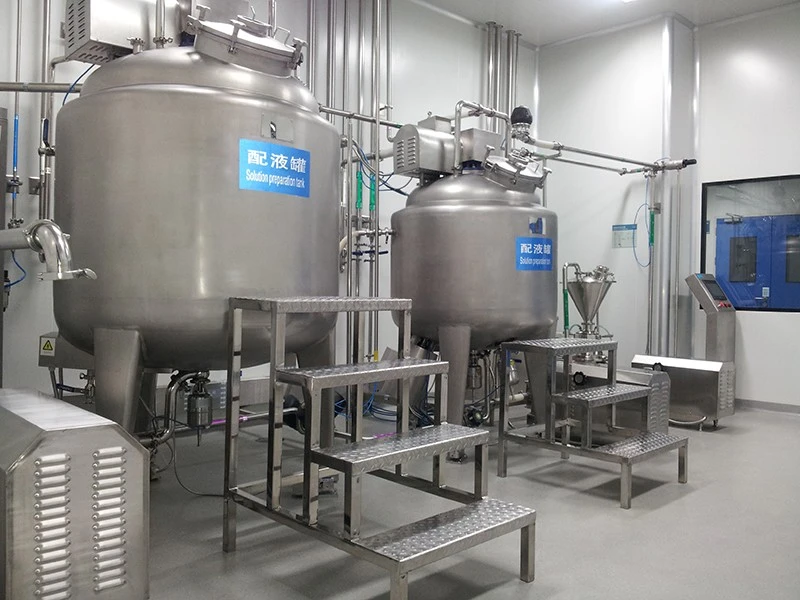
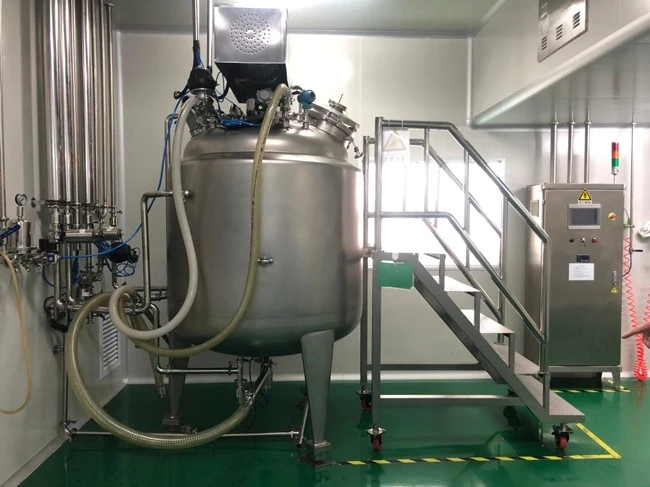
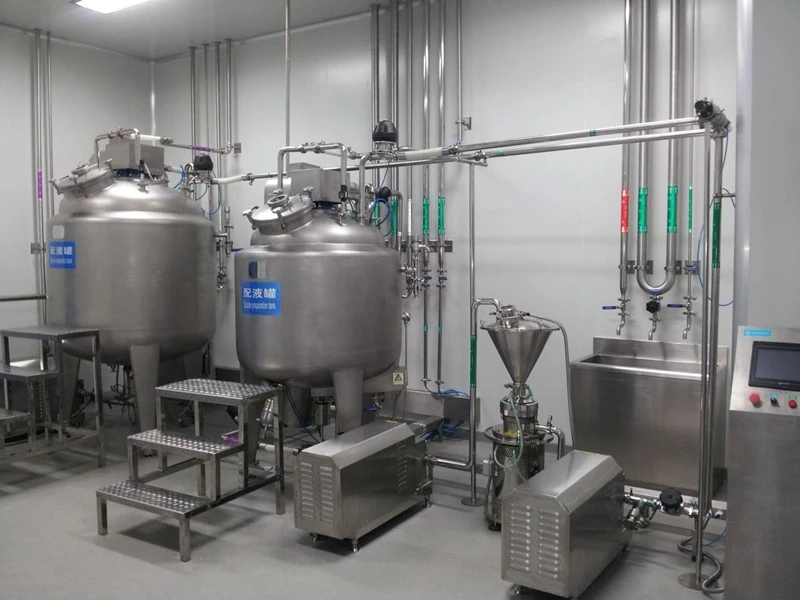
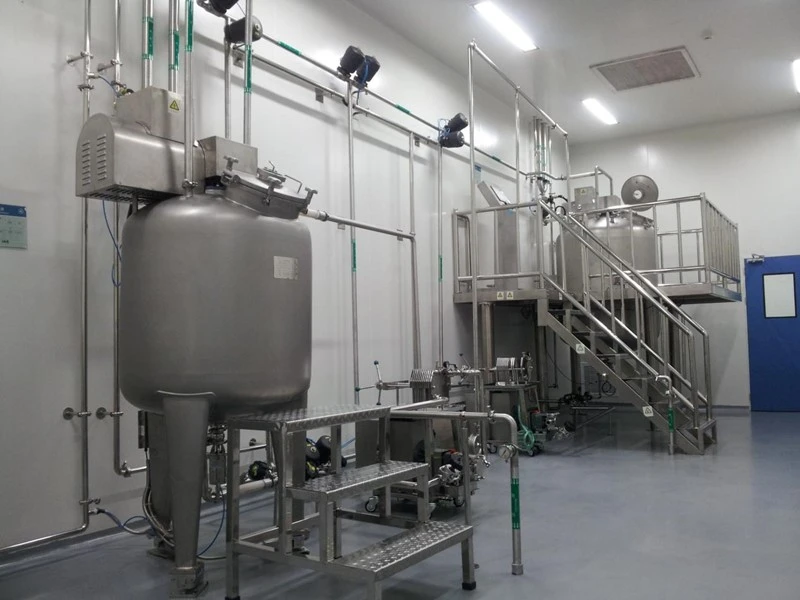
Our Batching Mixing Tank are purpose-built for the compounding, dissolution, and bulk holding of liquid pharmaceutical products. Rather than offering a single generic tank design, we configure each vessel around your specific formulation - matching impeller type, shear profile, and process instrumentation to the rheological properties and sensitivity of your drug product.
Available in working volumes from 50L to 1,500L, or more big capacity. every Batching Mixing tank is constructed from pharmaceutical-grade SS316L with electropolished internal surfaces and ASME BPE-compliant connections - designed for cleanability, sterility, and reproducible batch performance.
What Can It Produce?
Our Batching Mixing Tank support a wide range of liquid dosage forms. The agitation and thermal system are configured based on your product type:
|
Product Category |
Typical Products |
Key Processing Requirements |
|
Oral Solutions & Syrups |
Syrups, oral solutions, |
Complete API dissolution; controlled heating; gentle mixing to avoid degradation; |
|
Nasal Sprays |
nasal corticosteroids, saline sprays |
Low-shear mixing; sterile venting; sub-surface ingredient addition; particulate-free final product |
|
Ophthalmic & Otic Solutions |
Eye drops, ear drops, ophthalmic lubricants |
Stringent particulate control; sterile processing; minimal shear; sealless mixing option |
|
Topical Liquids & Gels |
Lotions, rinses, mouthwashes, topical gels |
Polymer hydration control; viscosity build management; wall-scraping for gel formulations |
How to Select the Right Mixing Tank
Choosing the correct tank configuration ensures efficient processing, product quality, and long-term reliability. Use the guide below to identify the configuration that matches your formulation:
Step 1 - Determine Your Viscosity Range
|
Viscosity Range |
Typical Products |
Recommended Impeller |
|
Low viscosity |
Oral solutions, eye drops, nasal sprays |
Marine propeller / Hydrofoil impeller |
|
Medium viscosity |
Syrups, suspensions, lotions |
Pitched-blade turbine |
|
High viscosity |
Gels, thick suspensions, creams |
Anchor scraper agitator |
Step 2 - Assess Shear Sensitivity
|
Shear Profile Required |
When to Choose |
Configuration |
|
Low shear |
Shear-sensitive APIs, protein formulations, ophthalmic solutions |
Hydrofoil or marine impeller; controlled tip speed; baffled design to minimize vortex |
|
Medium shear |
General dissolution, syrup preparation, standard suspensions |
Pitched-blade turbine; VFD adjustable speed for process flexibility |
|
High shear |
Powder wetting, deagglomeration, nanosuspensions, gel polymer dispersion |
Rotor-stator disperser (top or bottom entry); dual-agitator systems |
Step 3 - Match Capacity to Batch Size
|
Model |
Working Volume |
Typical Application |
|
PBT-100 |
70 L |
Pilot scale, R&D, small-batch specialty products |
|
PBT-200 |
150 L |
Small-scale production, clinical trial batches |
|
PBT-500 |
300 L |
Medium-volume production; most common general-purpose size |
|
PBT-1000 |
700 L |
Large-batch production for high-volume products |
|
PBT-2000 |
1,500 L |
High-capacity production; multi-product facilities |
Not sure which configuration fits your product? Our process engineers offer a free formulation review and will recommend an optimized tank configuration based on your specific formula and production targets.
Core Process Advantages
Formulation-Matched Agitation
Every impeller system is selected based on your product's viscosity, shear sensitivity, and mixing objectives - not from a one-size-fits-all default. This ensures optimal flow patterns, minimal energy input, and consistent batch quality without over-processing or under-mixing.
01
Uniform Temperature Control
Dimple jacket or half-pipe coil heating delivers even heat distribution across the entire vessel wall. Combined with PID precision control (±0.5 °C) and programmable ramp/ soak profiles, the system maintains accurate temperatures throughout dissolution, holding, and cool-down phases - critical for temperature-sensitive APIs and consistent viscosity control.
02
Batch Consistency Engineering
Standardized vessel geometry, fixed impeller clearance ratios, and VFD speed control with RPM feedback ensure that every batch follows the same hydrodynamic conditions. Combined with automated recipe execution and electronic batch records, you get reproducible product quality batch after batch.
03
Hygienic & Cleanable Design
All product-contact surfaces are SS316L with electropolished finish (Ra ≤ 0.4 μm). ASME BPE-compliant sanitary connections, zero dead-leg valve arrangements, and fully drainable vessel design support effective CIP/SIP cycles and minimize microbial contamination risk.
04
Common Manufacturing Challenges & Solutions
|
Production Challenge |
Impact on Product |
How Our Tank Solves It |
|
Slow or incomplete API dissolution |
Extended batch times; assay variation; rejected batches |
CFD-optimized impeller + baffle design creates targeted bottom-zone flow; controlled temperature ramping accelerates solubility kinetics without degradation |
|
Suspension settling during hold |
Dose non-uniformity; content variation across the batch |
High-flow low-shear hydrofoil impeller with optimized off-bottom clearance maintains uniform suspension without particle attrition; optional recirculation loop for extended holding |
|
Shear-induced API degradation |
Potency loss; formation of degradation impurities |
Low-shear impeller selection; controlled tip speed calculation; baffled design eliminates vortex air entrainment; sub-surface ingredient addition option |
|
Foaming during mixing |
Volume overflow; product loss; entrapped air affecting filling |
Submerged impeller operation; baffled flow pattern; programmable agitation ramp-up; optional vacuum deaeration capability |
|
Polymer lumping (fish eyes) in gels |
Uneven viscosity; gritty texture; rejected product |
Venturi powder induction system; high-shear pre-mixing zone; staged addition protocol with controlled hydration timing |
|
Microbial contamination risk |
Failed bioburden testing; product recalls; regulatory risk |
ASME BPE hygienic design; zero dead-leg valves; fully drainable vessel; SIP capable configurations; sterile vent filtration; optional magnetic sealless drive |
Technical Specifications
|
Parameter |
BMT-100 |
BMT-200 |
BMT-500 |
BMT-1000 |
BMT-2000 |
|
Total Volume (L) |
100 |
200 |
500 |
1000 |
2000 |
|
Working Volume (L) |
70 |
140 |
350 |
700 |
1400 |
|
Design Pressure |
0.3 MPa (FV / 0.3 MPa gauge) |
||||
|
Design Temperature |
0 – 121 °C (SIP capable) |
||||
|
Product Contact Material |
SS316L (electropolished Ra ≤ 0.4 μm) |
||||
|
Jacket Material |
SS304 |
||||
|
Agitator Motor (kW) |
0.55 – 1.5 |
1.1 – 2.2 |
4.0 – 7.5 |
7.5– 11 |
11– 15 |
|
Agitator Speed |
0 – 300 RPM (VFD adjustable; impeller-dependent) |
||||
|
Heating Method |
Electric / Steam / Hot Water (customer specified) |
||||
|
Temperature Control Accuracy |
±0.5 °C (PID controlled) |
||||
Standard Vessel Connections
- DN400 sanitary hinged manway with sight glass
- Product inlet / charging port (tri-clamp)
- Vent port with 0.22μm hydrophobic PTFE filter housing
- Bottom outlet valve (sanitary diaphragm, tank bottom flush)
- RTD Pt100 temperature sensor port
- Pressure / vacuum gauge port
- Sight glass with LED light
- CIP spray ball port (optional)
- Sanitary sample valve
After-Sales Service & Engineering Support
Pre-Sales Engineering
• Free Formulation Review: Our process engineers analyze your product formula and recommend the optimal impeller type, vessel size, and accessory configuration - no obligation
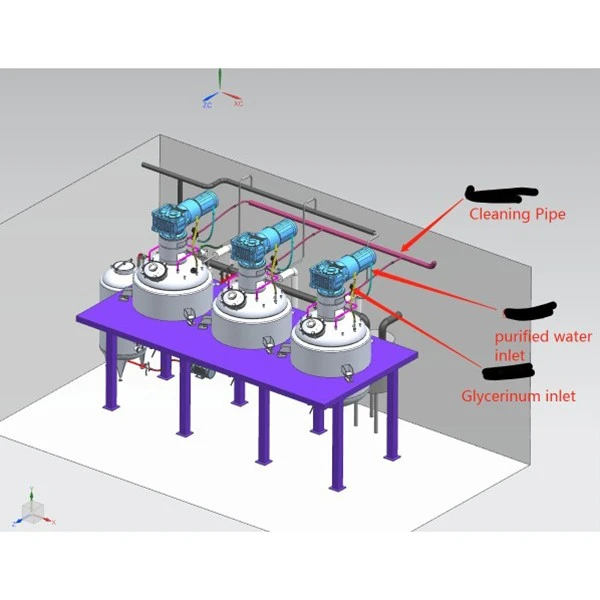
• 3D Layout Planning: We adapt nozzle positions, discharge heights, and overall dimensions to fit your existing production room layout and downstream equipment
• Scale-Up Consultation: If you're moving from lab to pilot or pilot to production, we provide geometric scaling parameters and process translation guidance
Installation & Commissioning
• On-Site Installation Support: Qualified engineers supervise mechanical installation, piping connections, and electrical commissioning
• Performance Qualification: Mixing uniformity testing, temperature mapping, and calibration verification
• Operator Training: Hands-on training for your production team covering operation, maintenance, and basic troubleshooting
Validation Documentation
• Design Qualification (DQ) protocol and report
• Installation Qualification (IQ) protocol and report
• Operational Qualification (OQ) protocol and report
• Material Test Reports (MTR 3.1.B) for all SS316L product-contact components
• Pressure vessel code certification (PED / ASME, as specified)
After-Sales Support
• Warranty: 12-month comprehensive warranty on all equipment and components
• Spare Parts: Global spare parts availability with priority shipping for production-critical components
• Preventive Maintenance Programs: Scheduled service visits to inspect seals, bearings, calibration, and hygienic condition
• Technical Support Hotline: Direct access to our engineering team for troubleshooting and process questions
• Retrofit & Upgrades: Field upgrades available - add CIP systems, change impeller types, upgrade controls, or expand automation as your needs evolve
Regulatory Compliance
- FDA 21 CFR Part 211: cGMP-compliant design with non-reactive, non-absorptive product-contact surfaces
- EU GMP Annex 1: Sterile-compatible configurations for aseptic processing applications
- ASME BPE: Bio-processing equipment standard - hygienic connections, surface finishes, and drainability
- 21 CFR Part 11 Ready: Automated control systems support electronic records and electronic signatures
- CE Marking / PED: Pressure Equipment Directive certified vessels for the European market
Our Factory


Hot Tags: batching mixing tank, China batching mixing tank manufacturers, suppliers