

Introduction: When Your Production Line Runs Faster, Can Your Quality Inspection Keep Up?
Behind every fish oil softgel capsule may be a major purchase order from a well-known nutraceutical brand.
For U.S. nutraceutical contract manufacturers, producing softgel capsules is about much more than filling gelatin shells with oil. Customers expect consistent product appearance, reliable quality, and on-time delivery. Production managers focus on efficiency, while QA/QC teams are responsible for maintaining product quality and meeting established specifications.
Here is the challenge: when a production line outputs hundreds or even thousands of softgel capsules per minute, can manual inspection keep up?
Asking employees to stare at continuously moving capsules for hours is certainly a test of human endurance. After all, human eyes are not industrial cameras, and they do not come with an automatic fatigue-recovery function.
This is one reason why more manufacturers are considering intelligent visual inspection technology.
But does every U.S. nutraceutical contract manufacturer really need a smart softgel inspection machine? Is manual inspection still sufficient? And what should manufacturers consider before investing in automated inspection equipment?
Let's look at the practical considerations from a production and investment perspective.
1. What Quality Control Challenges Do U.S. Nutraceutical Contract Manufacturers Face?
The U.S. dietary supplement manufacturing industry covers a wide range of production models. Some companies specialize in softgel manufacturing, while others provide contract manufacturing services for multiple dosage forms, including hard capsules, tablets, powders, gummies, and liquid supplements.
For example, Soft Gel Technologies, Inc. is a U.S.-based company providing softgel manufacturing services to the dietary supplement industry.
For manufacturers handling softgel production, several quality control challenges deserve attention.
1.1 Multiple Customers, Multiple Product Specifications
Different brand owners may have different requirements for capsule color, shape, size, appearance, and quality standards.
One production batch may involve transparent fish oil softgels, while the next may involve yellow vitamin E capsules or other nutritional supplements.
The more frequently products change, the more important inspection consistency becomes.
1.2 Production Speed Can Exceed Manual Inspection Capacity
As order volumes increase, production lines often operate at higher speeds.
If manufacturers rely entirely on manual inspection, additional quality control personnel may be required. If sampling inspection is used instead, an appropriate sampling plan must be established. Sampling should never be confused with inspecting every individual capsule.
1.3 Appearance Defects Can Affect Customer Satisfaction
During softgel manufacturing, various defects may occur, including black spots, surface scratches, irregular shapes, dimensional variations, seam abnormalities, and leakage-related defects.
If defective capsules reach the downstream packaging stage, manufacturers may face rework, product losses, and potential damage to customer confidence.
Softgel inspection should therefore be considered an important part of the overall quality control process, rather than simply another operation at the end of production.
2. Manual Inspection vs. Smart Visual Inspection: Which Is Better for Your Facility?
Manual inspection has not become obsolete, and automated visual inspection is certainly not a universal solution.
The real question is which approach better suits your production scale and quality requirements.
| Comparison | Manual Visual Inspection | Smart Visual Inspection |
|---|---|---|
| Inspection method | Human visual examination | Industrial cameras and image processing |
| Inspection consistency | Influenced by operator experience and condition | Repeats predefined inspection standards |
| Inspection speed | Depends on staffing and operator efficiency | Suitable for continuous automated inspection |
| Fatigue | Operators may become tired over time | Can operate continuously with proper maintenance |
| Inspection standards | Depend on training and human judgment | Can be standardized through inspection programs |
| Data management | Often requires manual recording | Data storage depends on system configuration |
| Initial investment | Relatively low | Higher equipment investment |
| Flexibility | Better for unusual or subjective situations | Depends on algorithms, optics, and product adaptation |
Advantages of Manual Inspection
Lower initial investment, with no immediate need to purchase automated equipment.
Human operators can use experience to evaluate unusual or complex appearance issues.
Suitable for small production batches, sampling inspections, and defect verification.
However, manual inspection is influenced by fatigue, attention, operator experience, and working conditions. As production volumes grow, employee training and inspection consistency become increasingly difficult to manage.
Advantages of Smart Visual Inspection
Performs continuous inspections according to predefined standards.
Reduces repetitive manual inspection work.
Improves inspection process standardization.
Helps integrate inspection into automated production lines.
However, automated equipment also has limitations. Inspection performance depends on camera resolution, lighting configuration, product positioning, image processing algorithms, inspection speed, and actual sample validation.
The equipment also requires regular maintenance, inspection, and calibration where applicable.
The most practical approach is not to replace every quality control employee with a machine. It is to let machines handle repetitive inspection tasks while trained personnel focus on quality standards, abnormal results, and quality decisions.
3. Does Your U.S. Nutraceutical Manufacturing Facility Need a Smart Softgel Inspection Machine?
The answer is not necessarily yes for every manufacturer. The decision should be based on actual production requirements.
The following four situations are particularly worth considering.
Situation 1: High Softgel Production Volumes
If your facility processes large quantities of softgel capsules every day, manual inspection may require multiple employees working across different shifts.
In this situation, it makes sense to evaluate labor costs, equipment investment, and long-term maintenance expenses to determine whether automation offers a financial advantage.
Situation 2: Multiple Product Specifications and Frequent Changeovers
If your facility serves multiple brand owners, capsule specifications and appearance requirements may change frequently.
Consider equipment that supports saved product recipes and convenient product changeovers.
This can reduce repeated setup work and improve consistency between different production batches.
Situation 3: High Customer Expectations for Product Appearance
If your customers have clearly defined acceptance criteria for black spots, scratches, shape irregularities, and other appearance defects, automated visual inspection can help establish a more consistent inspection process.
Situation 4: Plans to Upgrade Production Automation
If your company is upgrading its softgel manufacturing and packaging equipment, integrating visual inspection into the overall production process is worth considering.
For example:
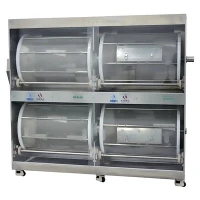
Softgel Manufacturing → Drying → Polishing → Smart Visual Inspection → Automatic Rejection → Acceptable Product Counting → Automatic Bottling
Integrating inspection with downstream packaging equipment can reduce unnecessary handling and improve production continuity.
Of course, if your facility operates on a small scale, has manageable manual inspection costs, or already meets its quality requirements through existing inspection methods, delaying an equipment investment may be perfectly reasonable.
Equipment investment should be driven by production needs, not by equipment suppliers.
4. What Should You Consider When Purchasing a Smart Softgel Inspection Machine?
A machine may have cameras, a computer, and a conveyor system. That does not automatically mean it is suitable for your products.
Before purchasing, manufacturers should carefully evaluate the following five factors.
4.1 Inspection Capabilities: What Defects Can the Machine Identify?
First, define exactly which defects need to be detected.
Common inspection targets include:
Surface defects: Black spots, stains, and foreign particles.
Surface damage: Scratches and visible damage.
Shape defects: Irregular shapes and deformation.
Dimensional defects: Capsules outside specified dimensional tolerances.
Seam abnormalities: Visible irregularities along capsule seams.
Leakage-related appearance defects: Visible characteristics associated with leakage, depending on the inspection method.
One important point: conventional visual inspection should not be considered equivalent to a complete capsule integrity or leak test. Microscopic leaks and defects that are not visually detectable may require additional testing methods.
4.2 Inspection Accuracy: Look Beyond the Brochure
Ask the equipment supplier to conduct actual tests using your products.
For example:
Can the machine identify black spots measuring 0.5 mm or larger?
Can it detect dimensional variations at the 0.1 mm level?
Is imaging performance consistent across different capsule colors and transparency levels?
What is the false rejection rate for acceptable capsules?
What is the missed detection rate for defective capsules?
These performance indicators should be verified under clearly defined testing conditions, including sample quantities, defect locations, and inspection criteria.
Do not just ask how fast the machine runs. Ask how accurately it inspects products at the required production speed.
4.3 Product Compatibility: Can It Handle Different Softgel Specifications?
U.S. nutraceutical contract manufacturers may produce round, oval, and oblong softgel capsules in different sizes, colors, and transparency levels.
Before purchasing, confirm whether the machine supports:
Multiple capsule shapes and sizes.
Different capsule colors and surface characteristics.
Saved product inspection recipes.
Convenient changeovers between different products.
4.4 Automation: Can It Integrate with Your Existing Production Line?
Evaluate the machine's automatic feeding, product conveying, defective product rejection, and acceptable product collection functions.
If you plan to connect the inspection machine to downstream counting or bottling equipment, check conveying height, operating speed compatibility, communication interfaces, and integrated control requirements.
4.5 Data Management and After-Sales Support
For manufacturers with demanding quality traceability requirements, it is important to understand whether the machine supports inspection data storage, batch records, user access management, and data export.
Also confirm whether the supplier provides installation and commissioning, operator training, remote technical support, software upgrades, and spare parts.
5. What Are the Production Facility Requirements for Installing a Smart Visual Inspection Machine?
Some purchasing managers may wonder: Does installing a smart visual inspection machine mean building a completely new cleanroom?
Usually, a separate cleanroom is not necessary solely for the inspection machine. However, the installation environment must comply with the facility's existing hygiene management requirements and the equipment manufacturer's specifications.
Consider the following five factors.
5.1 Production Area Hygiene
The installation area should be easy to clean and protected from dust, foreign particles, and other potential contamination sources.
Product-contact components should meet the relevant hygiene and material requirements.
5.2 Temperature, Humidity, and Optical Conditions
Maintain environmental conditions within the equipment manufacturer's specified operating range.
Visual inspection machines generally use dedicated lighting and imaging systems. Uncontrolled changes in external lighting may interfere with image consistency.
5.3 Electrical Power and Compressed Air
Confirm the required voltage, frequency, power consumption, and grounding specifications before installation.
If the machine uses pneumatic rejection systems, compressed air pressure, flow rate, and cleanliness should also be checked.
5.4 Installation and Maintenance Space
In addition to the machine's footprint, allow sufficient space for operation, cleaning, maintenance, product infeed and discharge, and defective product collection.
5.5 Cleaning, Calibration, and Maintenance Procedures
Establish equipment cleaning SOPs, routine inspection procedures, preventive maintenance schedules, and performance verification procedures to ensure that the machine continues to perform as intended.
For U.S. dietary supplement manufacturers, FDA 21 CFR Part 111 includes requirements relating to equipment design, installation, cleaning, maintenance, and the inspection, calibration, and control of automated, mechanical, and electronic equipment.
It is important to clarify that the FDA does not require every dietary supplement manufacturer to purchase an automated visual inspection machine. Equipment selection and implementation should be based on the manufacturer's quality system and specific production processes.

6. Vitol Smart Softgel Inspection Machine: Making Inspection More Standardized
For softgel manufacturers considering automation, selecting the right machine means looking beyond inspection speed. The equipment must also adapt to the actual products and production requirements.
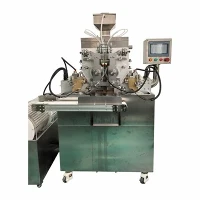
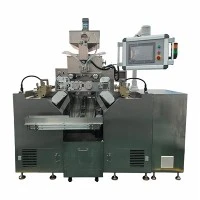
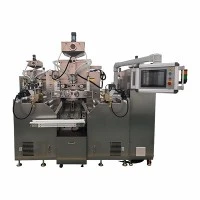
Vitol's intelligent visual inspection machine is designed for the pharmaceutical and health supplement industries and can inspect both softgel and hard capsules.
Using industrial cameras and image processing technology, the machine captures images of softgel capsules from multiple angles.
For round, oval, and oblong softgels, its 360-degree capsule rotation inspection system captures images from different viewing angles to help identify surface and shape abnormalities.
Depending on the machine configuration and validated testing conditions, its technical inspection capabilities include:
Detection of black spots measuring 0.5 mm or larger.
Identification of dimensional variations at the 0.1 mm level.
Inspection of surface appearance and shape abnormalities.
Identification of certain seam-related and leakage-associated visual defects.
The machine can operate as a standalone inspection unit or be integrated with other equipment according to production line requirements.
For U.S. nutraceutical contract manufacturers, the value of this technology goes beyond reducing manual inspection work. It can help establish a more repeatable, verifiable, and standardized product appearance inspection process.

7. Frequently Asked Questions (FAQ)
Q1: Does the FDA require U.S. nutraceutical contract manufacturers to use automatic visual inspection machines?
No. FDA 21 CFR Part 111 establishes cGMP requirements for dietary supplement manufacturing, packaging, labeling, and holding, but it does not specify that manufacturers must use a particular type of visual inspection machine.
Q2: Can a smart visual inspection machine completely replace manual inspection?
Not necessarily. The machine handles repetitive, standardized inspection tasks, while personnel remain responsible for equipment management, quality standards, abnormal result verification, and quality decisions.
Q3: Can the machine inspect both transparent and opaque softgel capsules?
Yes. The machine can inspect both transparent and opaque softgel capsules by using different lighting configurations.
For opaque softgels, specially configured lighting helps identify surface defects and appearance irregularities.
For transparent softgels, the imaging system can capture not only external appearance but also clearly reveal visible internal defects, providing a more comprehensive inspection solution.
Q4: Can the machine detect all leaking softgel capsules?
This cannot be guaranteed through visual inspection alone. A vision system can identify certain visible characteristics associated with leakage, but microscopic or visually undetectable leaks may require additional testing methods.
Q5: How can manufacturers determine whether the machine is worth the investment?
Evaluate current manual inspection costs, production volume, inspection performance, false rejection rate, missed detection rate, equipment maintenance expenses, and future production plans.
The equipment price alone should never be the only purchasing consideration.

Conclusion: The Next Competitive Advantage May Come from Smarter Quality Control
For U.S. nutraceutical contract manufacturers, real competitiveness is not simply about producing faster. It is about consistently delivering products that meet customer expectations.
As production volumes grow, customer requirements become more demanding, and labor costs increase, traditional inspection methods may face greater pressure.
A smart softgel visual inspection machine is not a mandatory investment for every manufacturer. However, for companies seeking higher inspection efficiency, more standardized quality control, and greater production automation, it deserves serious consideration.
Let machines handle repetitive inspection. Let people focus on judgment and quality management. That may be a smarter division of responsibilities for modern nutraceutical manufacturing.
Looking for an Automated Softgel Inspection Solution?
If your facility manufactures fish oil, vitamin E, CoQ10, or other softgel products, Vitol can help evaluate a suitable automated visual inspection solution based on your capsule shape, size, color, inspection requirements, and production speed.
To help us understand your requirements, you can provide:
Softgel samples or product photographs.
Capsule dimensions and shape.
Defect types you need to inspect.
Current production speed.
Standalone inspection or production line integration requirements.
https://www.vitolsoftgel.com/softgel-machine/automatic-softgel-inspection-machine.html
Let's start with your products, not with a generic equipment quotation.