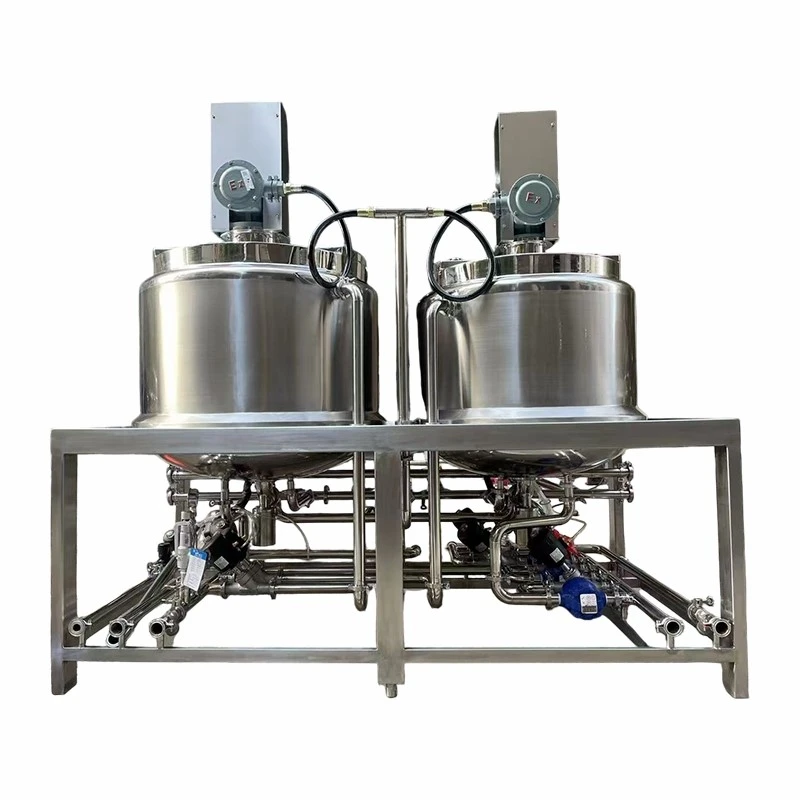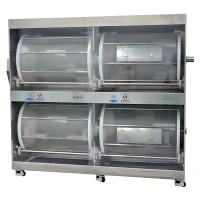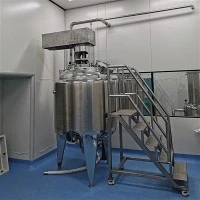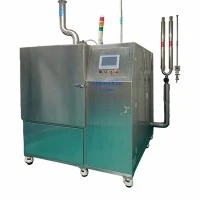

Mixing tanks (including concentrated and diluted mixing tanks) are commonly used containers for preparing pharmaceutical solutions in pharmaceutical factories and hospital preparation rooms. With the continuous improvement of production levels in the pharmaceutical industry, the requirements for mixing tanks have also gradually increased. The previous principles of liquid level measurement are no longer suitable for today's pharmaceutical industry in terms of technology and accuracy.
Previously, mixing tanks were divided into two stages: visual level gauges and electronic remote level gauges. The stage where the liquid level in the tank was measured using visual level gauges (such as glass tube level gauges or electronic remote level gauges) was the initial stage of mixing tanks. The height of the liquid level in the tank was detected visually or by pressure sensors, and the weight of the liquid in the tank was then calculated from the height value. This type of mixing tank has the following disadvantages: Due to manufacturing errors, it is difficult to obtain accurate cross-sectional area data, and the volume data calculated from the cross-sectional area has a large error. The density of the liquid in the tank varies with each dispensing; the density of the solution is not constant, and the calculated weight of the liquid is inaccurate.