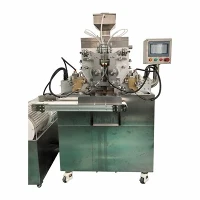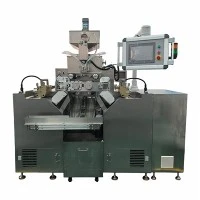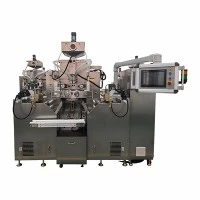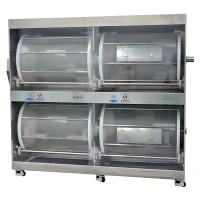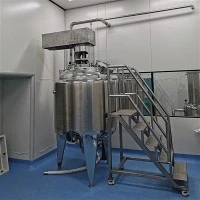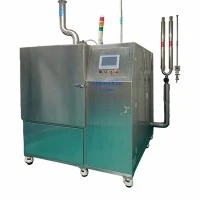

Tank Body: This is the main structure of the equipment, typically made of corrosion-resistant and easy-to-clean materials. Its volume can be designed according to production needs. The tank body is equipped with a sight glass for observing the state of the internal materials; it also has multiple interfaces for connecting various pipes and sensors.
Agitation System: This is the core of the mixing function. It includes a drive motor, reducer, agitator shaft, and agitator blades. Blade shapes vary (e.g., paddle, anchor, turbine, etc.) to accommodate the mixing requirements of materials with different viscosities. The sealing structure is crucial to this system; its versatility ensures no leakage occurs when the agitator shaft passes through the tank in a vacuum environment.
Vacuum System: This mainly consists of a vacuum pump, vacuum piping, vacuum valves, and a vacuum gauge. The vacuum pump is the "power source," responsible for extracting gas; the vacuum gauge is used to monitor the vacuum level inside the tank in real time. Depending on the required vacuum level, a single-stage pump or a combination of multi-stage pumps may be used.
Heating/Cooling System: Many processes require temperature control of the materials. The tank body is often equipped with a jacket or built-in coil, allowing for the heating or cooling of materials by circulating a heat transfer medium (such as hot water, hot oil, or cooling water), and achieving efficient heat exchange in conjunction with the vacuum environment.
Control System: Modern vacuum mixing tanks are typically equipped with an automatic control system. Through a control panel or more advanced interface, operators can set and adjust parameters such as stirring speed, vacuum level, temperature, and process time to achieve automated production and ensure stable product quality.